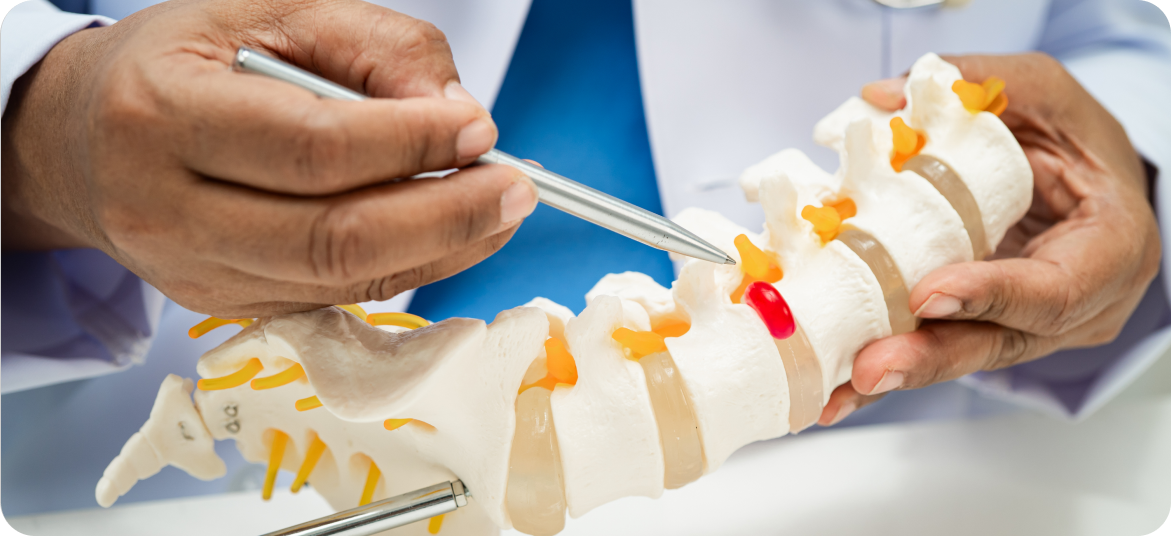
LUMBAR SPINE SURGERY — RELIEF, STABILITY & MOBILITY
Lumbar spine surgery is designed to treat lower back conditions that cause persistent pain, nerve compression, and limitations in daily movement. Our goal is to reduce symptoms, restore function, and prevent further spinal deterioration using modern, evidence-based surgical techniques.
Each treatment plan is personalized based on imaging results, symptoms, and lifestyle needs. Depending on the diagnosis, procedures may focus on decompressing nerves, correcting instability, and restoring safe spinal alignment to improve comfort and long-term outcomes.
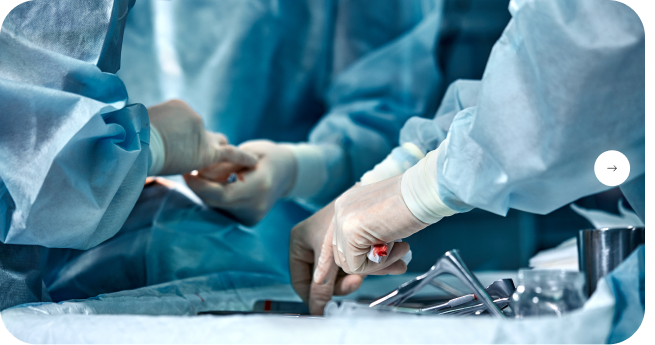
Lumbar spine surgery is built to restore comfort and movement — helping you walk, stand, and live with less pain and more confidence.

Lower Back Pain Relief
Lumbar spine surgery reduces nerve compression that causes chronic lower back pain and radiating leg symptoms like sciatica.

Spinal Stability
Correcting structural instability improves alignment and support, helping prevent pain recurrence and further degeneration.

Improved Daily Movement
Patients regain functional movement and return to daily activities with greater comfort, confidence, and control.
Lumbar spine conditions are often progressive when nerve compression or instability is present. By using modern surgical approaches and precise diagnostics, we aim for predictable outcomes with safer recovery and durable long-term results.

RESTORE YOUR LOWER BACK FUNCTION WITHOUT LIMITING YOUR LIFE
Lumbar spine surgery can be life-changing for patients who have tried conservative treatments without success. Whether the cause is a herniated disc, spinal stenosis, degeneration, or instability, the procedure is designed to relieve nerve pressure, restore support, and help you move comfortably again.
Get the Answers To Common Questions
Lumbar spine surgery may be recommended for patients experiencing persistent lower back pain, leg pain, numbness, or weakness caused by nerve compression or spinal instability that has not improved with non-surgical treatments.
Lumbar spine surgery is commonly used to treat conditions such as herniated discs, spinal stenosis, degenerative disc disease, spondylolisthesis, and other disorders affecting the lower spine and surrounding nerves.
Many patients notice symptom relief shortly after surgery, especially nerve-related pain. Improvement continues gradually as the body heals, physical activity increases, and rehabilitation progresses.
Recovery time varies depending on the procedure and individual health factors. Some patients return to light activities within a few weeks, while full recovery may take several months with guided rehabilitation.
Lumbar spine surgery is performed using modern, evidence-based techniques designed to maximize safety and effectiveness. Your care team will thoroughly evaluate your condition and discuss all risks and benefits before surgery.